Tampilkan postingan dengan label cookbooks. Tampilkan semua postingan

Maryland Day 2015


We have a special affinity for the state of Maryland as it is the place where we met and married. We have celebrated the anniversary of day that Maryland became a state for many years, and it was one of the highlights of the year we celebrated all the states' anniversaries. Nowadays, most state anniversaries come and go with nary a mention at our house, but Maryland always gets its due.

This year we made Chèvre Croquettes on Spring Field Greens, a recipe from FireFly Farms found in our Dishing Up Maryland cookbook (which we bought on Nantucket - go figure), and for dessert a Lady Baltimore Cake.

The salad was easy to prepare, especially since we skipped what would have been the most time-consuming part - cooking the beets. Neither one of us is crazy about beets, so we just decided not to include them at all. The Croquettes were prepared using soft goat cheese mixed with a bit of chopped thyme, some garlic salt, and pepper. I formed the mixture into four small medallions and dipped each in a beaten egg, and then corn meal. They were fried in olive oil for 3 minutes and then placed on a bed of greens with chopped red, yellow, and orange peppers and a minced shallot. The vegetables were dressed with a light vinaigrette made from red wine vinegar, olive oil, and Dijon mustard. The salad was quite tasty and was a meal unto itself.


The Lady Baltimore Cake was a much bigger project than the Croquettes. Neither one of us even knew such thing as a Lady Baltimore Cake existed until Pam saw mention of one in Beverly Cleary's book Emily's Runaway Imagination (which takes place in Oregon) earlier this year.

We baked the cake the night before the celebration as we realized that we would need a bit of time for this project. We used recipes we found on the allrecipes.com site for the cake and the frosting. This is a triple layer cake, and while we do have three round cake pans, one of them is 9 inches, while the other two are eight. I used all three and then cut off the excess from the larger cake. This gave us a fun taste test. We felt like kids dipping the cut off pieces of cake into the leftover frosting - there was way more frosting than we needed for the cake. One thing about this cake is that it uses A LOT of egg whites (six for the cake itself, and four for the frosting), so if you make it you may want to have some plan for all the yolks. I attempted to make an omelet the next day with all of them, but it was awful - extremely dry, even though I added two whole eggs to the saved yolks before cooking them. The cake though was yummy, and turned out not to be as sweet one might expect when the frosting recipe calls for 1/4 c of corn syrup and 2 cups of sugar.

The dinner -- and especially the dessert -- was perfectly paired with a non-Maryland wine: a Blanc de Blancs from our favorite local vineyard.

Our celebration was muted, sadly, by the unraveling of our beloved Baltimore in the wake of the murder of Freddie Gray, whose memory we toasted at the outset of the dinner.

Two Recipes from The Starving Poets' Cookbook in honor of National Poetry Month


I found a copy of The Starving Poets' Cookbook among late father's things earlier this year. Each entry is a two-page spread that includes a poem about food, a recipe, and an anecdote on how the poet obtained the recipe. My father was a writer and poet himself, but he was no cook, so I imagine that one of the entries in this was written by someone he knew from one of his writer's groups. In honor of National Poetry Month James and I selected two recipes to try from this slim volume. The first was Saffron Seafood which we made with frozen precooked shrimp. First we thawed the shrimp, then removed the tails. The shrimp was then coated with soy sauce flavored with ginger, and corn meal.

The saffron cheese sauce was made by boiling 1 1/2 cups of chicken broth with 1/2 cup of milk, and adding a pinch of saffron (good thing that the recipe called for a pinch, because that was exactly the amount we had on hand). This was poured into a ceramic bowl, and the same saucepan was used to mix two T. of oil with two T. of flour. The saffron broth was poured back in and then I added a bit of cheddar cheese and heated until the cheese was melted and the mixture was smooth.

In another pan I sauteéd a chopped onion and a minced garlic clove and then added the shrimp. This mixture was put into a baking dish, and then topped with the cheese sauce. It was baked at 425 in the convection oven for 15 minutes. It frankly looked unappetizing, but was in fact quite tasty.

The dessert we chose, Banana Coins, was quite a bit easier to make. We melted some Mexican chocolate in a pan, chopped two bananas into 1/4 inch dices and dipped them in the chocolate. They were placed in the freezer for 15 minutes, at which time they were ready to eat.


Enchiladish

For a dinner at our church this weekend, I had volunteered to make a casserole, with no specific choice in mind. When the time came, I almost reverted to a potato-mushroom casserole with sun-dried tomatoes that I have not made in some while (and which seems to be absent from this blog). In the spirit of Nueva Receta, however, I decided to go to the cookbook shelves, and found a likely candidate in the second book I picked up -- Extending the Table.

The index includes several items under the heading "casserole" and confirms that lasagna can be considered part of the category. I chose, however, to try the Enchilada Casserole, also known as Locro, from Paraguay. As the recipe promises, this is far easier to make than actual enchiladas would be.

As published, the recipe is for a tiny casserole, so I doubled it. The result was still rather shallow in the pan, so I will probably make a larger batch next time. This is not baking, so the proportions need not be exact. For example, the recipe calls for 1/3 cup of chopped green pepper, which I "doubled" to one large green pepper plus two jalapeños.

I preheated the oven to 350F and then browned a pound of ground turkey, a chopped onion, the peppers mentioned above. I omitted the salt called for in the recipe because it also calls for tomato sauce, which always has plenty of salt. I did, however, add a lot of chili powder and oregano. I will also add cayenne next time.

The recipe indicates that fat should be "skimmed" at this stage, because it calls for ground beef. The lean ground turkey did not require skimming. I added one can of tomato sauce and 3 cups -- one full bag -- of frozen corn. (The recipe suggests hominy, which we have given an honest try a couple years ago and just don't like, or canned corn, which is just gross. )

I simmered this for just a few minutes and poured it into the casserole, baking for 20 minutes. I then added a generous shredding of pepper-jack cheese and baked for five more minutes.

This was a crowd pleaser: we brought home a clean dish!


Chicken Rendang

Map: Wikipedia -- Click to enlarge
Almost 2/3 of the population lives on the Malay Peninsula,
with most of the rest occupying northern Borneo.
For this evening's dinner, I had decided yesterday to return to the core purpose of this blog, which is to encourage us to take a fresh look at the familiar recipe books in our kitchen. It was to be our first unscripted Saturday in our own house in a couple of months, and there was no excuse not to pull a book off the shelf and look for something new. It was also our first Saturday after the end of our farm-box season, so local vegetables, though they could be involved, would not dictate the menu.

I opened Extending the Table, an excellent collection of recipes from throughout the world, and started scanning the index for the main ingredients we had on hand. We quickly settled on chicken rendang (rendang ayam), which I later realized would be my first foray into Malay cooking.

I began by finely chopping an onion, one dried chili pepper and three garlic cloves. I grated  hunk of ginger root with our microplane and tossed all together in a small bowl. Once I had heated olive oil in our indispensable cast-iron skillet, I added these and sauteed gently until the mix was golden brown and beginning to caramelize. I then added one pound of chicken breast, cut into bite-size pieces, 1 cup of water, half of a 13.5-ounce can of coconut milk, and about a tablespoon of lemongrass paste. We were looking for fresh or dried lemongrass, but when we found the paste and neither of the other forms, we declared our quest successful enough. I heated all of this until boiling, and continued for just a few minutes until the chicken was nearly cooked through.

I then added the rest of the coconut milk and a tablespoon of sugar, returned to boil briefly, and then I lowered the heat and simmered for 90 minutes. Meanwhile, I sliced a cucumber (diagonally, as the recipe suggests, and with "racing stripes" as I always do cucumbers) and put it in the fridge. Near the end of the simmering, I cooked rice in a separate pan. At 90 minutes, the chicken was extraordinarily tender and the sauce greatly reduced, but still like a sweet gravy. We served it over the warm rice, with cuke slices on the side.

This paired very well with the lemony 2012 Rkatsiteli from our friends at Westport Rivers.

Where to find many of our cookbooks ...

Most of the cookbooks mentioned in this blog can be found in the Cook Book section of the online book store I helped to set up for our church. I encourage readers to do the opposite of what often happens -- use the online store to learn about books, and then buy them locally if you can. But if you are going to buy online, doing so through our store does return a small kickback to our community.
Sreenshot: First Parish Online Book Store

There's No Q in Pi

As we recently wrote on Pi Day, we purchased a couple of cook books -- including a Pie Cook Book -- but we did not make any pi. The closest we came was a local pizza pi. We also promised to follow up soon, and today we came through.

PI DAY PURCHASE --
Order now for 3-14-15
Breakfast Pie with a Hashbrown Crust was actually on the family menu for last night, but a college tour of a certain very hilly campus had us returning home with groceries with too little time or energy to tackle this dish. And dish is an important word here -- quite a few were used, including almost all of our indispensable cast-iron skillets.

Knowing that our daughter does not like quiche, we maintained author Teeny Lamothe's ruse of calling this breakfast pie as we answered the repeated query, "what's for dinner?"

This pi begins with hashbrowns. I shredded a half dozen russet potatoes, squeezed out the excess moisture, tossed with salt, pepper, and rosemary. I then cooked them on hot oil on a hot skillet. I resisted the urge to stir as they cooked; rather I came close to Lamothe's standard of browning on one side and then turning (that is, scraping). I then pressed this mixture into a large, skillet in which I had heated some oil (good thing olive oil is good for us).

Meanwhile, I had cooked some leeks (which Pam had lovingly thawed and rinsed from last year's farm box) and mushrooms in butter (good thing butter is good for ... oh, wait ...), along with a bit more pepper. Also meanwhile, I whisked together a half dozen eggs and a cup of cream (good thing ...) and a half cup of shredded Parmesan. Then I placed the vegetables in the potato crust, topped with another half cup of Parm, and carefully poured over the egg mixture.

I placed all of this in a pre-heated oven, and convected at 350 for 30 minutes. The results?

"Is this quiche?" were the first skeptical words from our darling daughter as she eyed what was obviously a form of quiche on her plate. "I had a big lunch," were her next words. Nonetheless, she ate quite a sizeable portion of what we all agreed was ...
pretty good pi.

Calle to Mesa

Image from the Projects Abroad blog, which has a recipe for gorditas.
For this post, we are skipping over the part where a cookbook sits on our shelf for months or years before we actually use it. This evening's Hayes-Boh family dinner comes from a book that just entered the house Friday, and has not even found a spot on the shelf yet.

While we were in Boston's western suburbs on Friday, we decided to visit Walden Pond and have lunch in the center of Concord. As we parked the car, we noticed these cookbooks in the window of the Concord Bookshop. It being Pi Day, we could not resist having a look. We had already decided to wimp out and have pizza pi for dinner, so buying a pi book would be our feeble nod to the occasion.

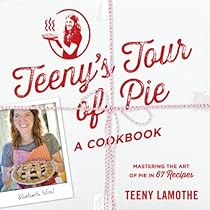
Inside we found a wonderful book store, certainly the largest independent book store I've seen in ages, and larger than most chain stores. If the town of Concord were not so stingy with parking (60-minute maximum), we might have lingered longer than we did. But we did stay long enough to find a book each. Pam -- the real ∏ enthusiast -- found Teeny's Tour of Pie, which is certain to make its Nueva Receta debut in the near future.

I was drawn to Latin American Street Food, by Sandra A. Gutierrez, the subtitle of which is practically a geography lesson: The Best Flavors of Markets, Beaches, and Roadside Stands from Mexico to Argentina. Gutierrez is also the author of The New Southern-Latino Table: Recipes That Bring Together the Bold and Beloved Flavors of Latin America and the American South -- an other geography essay in the making.

Image: Trip Advisor, since I don't have any photos from my 1985 visit.
Any reference to street food always brings three memories to mind. The first is during my very first trip to Latin America, my friend Mike and I ventured no further than the beach town of Ensenada, south of Tijuana, with very little money in our pockets. I remember spending the equivalent of 4 cents each for fish tacos from the street -- fried fish with shredded lettuce and mayonnaise, serve in the summer sun. Having survived that -- along with water from a standpipe right on the beach -- foreshadowed my years of travel in Latin America with minimal gastric difficulties. The other memories are of vendors in Puebla Mexico a few years later, boarding city buses with little charcoal grills -- full of red-hot coals -- as they roamed the downtown looking for the best places to set up shop, and of plastic sleeves offered on every corner in Puebla and Cholula, about a foot long, full of chili-covered peanuts and topped with half a lime. Squeezing lime juice on street food, we learned, was like magic for keeping it safe. Or so we chose to believe.

With all that in mind, it seems strange to make street food in a New England kitchen in the winter, but that is what we are doing. We let our daughter browse the book, and she quickly identified Aguachile de Camarones, a Sinaloan dish that Gutierrez names Kick-in-the-Pants-Spicy Shrimp in Chile-Lime Dressing. The title is a whole list of reasons for this to appear on Mesa Hayes-Boh.

The recipe starts with instructions to cook and then cool shrimp, but we always keep cooked, frozen shrimp on hand, so I thawed a pound of shrimp in water and then drained it thoroughly. In a blender I placed 3 finely chopped and seeded serrano chiles (but they were New England grocery-store serranos, so they had very little effect), close to a cup of cilantro, a couple of cloves of garlic (frozen from last autumn's farm box), a shallot we had on hand (the recipe calls for a small red onion), and a cup of lime juice. The recipe calls for fresh lime juice, but this is March in Massachusetts, not September in Sinaloa, so that would have cost a fortune. I compromised by squeezing three limes (with our citrus press) and topping up a cup with bottled juice.

I blended these until very smooth, to make a dressing is the aguachile in the title of the dish -- chile water. Gutierrez discusses the relationship of this dish to ceviche, and the varying degrees to which the seafood can be blanched, boiled, or cured by the citric acid. Because the dish is normally very spicy, Gutierrez suggests serving it with avocados. Because avocados decay quickly, she suggests dowsing them in lime juice (cures everything; see above). I did exactly this, and even though the dish was not very spicy, it was a good pairing. We also had tortilla chips as suggested in the book and quesadillas, just because.

Diego and I
Image: PBS
The combination of foods was very satisfying and delicious. We had a lot more dressing than we needed, so I will be experimenting with its use on some kind of white fish later in the week (we are out of shrimp).

This meal, of course, was begging to be paired with some sort of beer, and we tried a second opening of a special Scottish ale I recently concocted. I described it in some detail in the Heritage Chili post last month, but did not open it until about 10 days ago; it was not fully developed at that time, and I was a bit worried. But when Pam opened it this evening I could tell all was well, and it turned out to be quite a nice ale, and a good accompaniment, not as appropriate at Negra Modelo, but at least as delicious.

The meal was a hit, and to turn this into a complete "Mexican Party with My Parents" -- as our daughter called it -- we watched Frida together and had some Mexican hot chocolate at intermission.

Cook Book Nook

My high school friend Joe Duley is not just the ultimate class clown. He is a gifted video producer who brings all of his wit to bear in promoting a local business in his adopted home town of Portland Maine. His tastefully ribald exploration of LeRoux Kitchen (with stores in Portland, Portsmouth, and Martha's Vineyard) is also a heartfelt celebration of a local institution.

The store's cookbook vault is enticing, though to Joe's obvious disappointment it is not age-restricted. His play with the Spanish and French language adds to our interest, since this blog may have been born in Spanish class but was conceived in French class!

A maiden voyage into a new cookbook

Last summer while visiting Nantucket, we spied a cookbook called Dishing Up Maryland, and even though we already had so many cookbooks we knew we could never possibly exhaust all the recipes waiting to be prepared, we, nevertheless, could not resist purchasing this one from our home state. And then it sat on our cookbook shelf for six months. So, in the spirit of actually using my cookbooks (which was why I started this blog in the first place) rather than looking up a recipe online, I took it off the shelf and picked a recipe. The cookbook is divided by the four seasons, and although the calendar, and quite frankly, the warm temperatures, still say it is fall, I selected "Rockfish in Tomato Saffron Cream Sauce over Rice" from the "Winter" section.

We began our preparations at Fresh Catch in Mansfield, Massachusetts. The cookbook said that rockfish is also known as striped bass, which was what we expected we might find at the fishmonger, but rockfish was not to be had by any name. We were advised that haddock would be a good substitution, so we bought that, and it was not cheap.

Back at home I got out my trusty indispensable cast-iron skillet, and melted 3T of butter, to which I added 3 small chopped shallots. After these were sauteed, I added a stalk of celery (cut into 8 pieces); a large pinch of saffron threads, 1/3 c. of white cooking wine, a pinch of garlic salt, and a one-quart baggie of frozen tomatoes. The recipe said to use a 12 oz. can of tomatoes, but we hardy New Englanders know to freeze or can some of our harvest if we don't want to eat tomatoes that taste like wood later in the year.All of this was cooked down for about 10 minutes. The fish was then added to the skillet, which was kept on a low simmer for another 10 minutes. The fish was removed and set aside, covered, on a plate, while the sauce cooked down some more, and rice was cooked. When the rice was ready, I removed the skin from the fish, cut it into small pieces, and put it back in the pan along with 1 cup of heavy cream. This all cooked for about 5 minutes more.

The result was exquisitely tender fish in a delicious and savory sauce. The sauce probably could have cooked down a bit more, as it was very watery, which was why I did not see any need to puree it as the recipe suggests.

Older Post ►
 

Copyright 2011 my many cookbooks is proudly powered by blogger.com